
The limited availability of flexible (flex)-fuel vehicles in the Indian market and the slow rollout of ethanol-blended petrol by oil-marketing companies (OMCs) remain major obstacles to achieving widespread use of biofuels in the transportation sector in India. Recently, two Union ministers have emphasised India's biofuel potential, arguing that it has the capacity and potential to lead a transition towards widespread biofuel adoption. Road Transport Minister Nitin Gadkari signalled that this transition is well underway and urged car manufacturers to quickly adapt and introduce new biofuel-run vehicles, lest the government resort to taxing diesel vehicles.
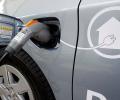
At a time when consumers increasingly embrace green mobility solutions, it is not electric cars but hybrids that are taking the lead, as automotive sales data indicate. Since January, 64,097 electric cars have been sold compared to 266,465 hybrids, according to data from the Ministry of Road Transport and Highways' Vahan dashboard. Hybrid car sales have surged from 4.42 per cent of the 4.1 million cars sold in calendar year 2022 to 7.2 per cent this year.
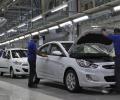
The country's leading automakers Maruti Suzuki and Hyundai Motor reported a decline in dispatches to dealers in March as shortage of electronic components impacted production. On the other hand, Tata Motors, Skoda and Kia India posted their highest ever monthly wholesales last month. Toyota Kirloskar Motor said its dispatches in March were the highest in the last five years while Mahindra & Mahindra also reported a robust increase in its passenger vehicle dispatches in March.

Product launches to drive incremental volume growth for players such as Maruti Suzuki; medium and heavy commercial vehicle revival on track.

Primary steel producers in the domestic market have raised product prices by 2.5 to 3 per cent for December to address margin compression and in anticipation of a demand pick-up.

Open order books in February breach 700,000; wait period for some models exceed a year.
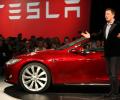
If Tesla comes in, India's position as a manufacturing hub will rise many notches, as it will become only the second country, after China, to have both Apple as well as Tesla.

Consumer sentiments have been dampened due to several factors like tight liquidity, high insurance, and high costs

Packed to the brim with features that were missing in its predecessor, the all-new Scorpio N is a huge step forward, says Rajesh Karkera.

Auto sector cheers RBI rate cut as 'festival gift'

Large manufacturers are investing in small companies to get a peek into their R&D. Alnoor Peermohamed and Anita Babu report.
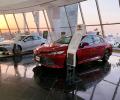
The growth momentum that started during the festival season is likely to sustain in the new year, reports Arindam Majumder.

Besides, Toyota and MG Motor also reported nil sales as they suspended operations even before the imposition of lockdown on March 25 to check the spread of coronavirus. In two-wheeler segment, niche bike maker Royal Enfield said it had zero sales in the domestic market but exported a total of 91 units last month.
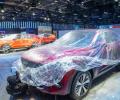
Owing to the poor market conditions and tepid sentiments, the size of the show has shrunk compared to the last edition, which took place in 2018. A majority of the two-wheeler makers, and several car and commercial vehicle makers, have opted out of this year's show, which opens for the media on Wednesday.

The number of participating automakers has fallen from 50 in 2018 to 30 this year. The count of exhibitors, including technology companies, has come down from 119 to 112. And showstopper luxury and supercar brands, including Toyota, Jeep, Lamborghini, Porsche, and Volvo will be missing. Similarly, the commercial vehicle makers also gave the show a miss -- a prolonged economic slowdown has dented their fortunes and near chances of any recovery.

Close to half a dozen more three-row premium mid-size models are expected to hit the road over the next two years.

Consumer stocks remain the biggest laggard on the bourses. The Nify50 weighting of FMCG stocks declined to a decade low of 9.9 per cent at the end of March this year, down 150 basis points from 11.4 per cent a year ago. At their peak in March 2013, major FMCG stocks, such as Hindustan Unilever, ITC, and Asian Paints, together accounted for 15 per cent of the Nifty50. But now together with automobile stocks, the consumer goods sector accounts for only 14.7 per cent of the index, down 200 basis points in the past 12 months and 37 per cent from the record high weighting of 23.4 per cent at the end of March 2014.

While the Slavia comes in eight different variants, it's the base model that starts at around Rs 10.7 lakh that is most likely to take a bite out of the market share of its competitors, says Pavan Lall.
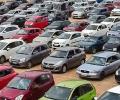
Passenger and commercial vehicle prices are expected to rise as automobile companies invest in upgrading vehicles to meet stricter emission norms that kick in from April next year. The Indian automobile industry is currently working to make their products meet the second phase of Bharat Stage VI, equivalent to Euro-VI emission norms, in real time driving conditions. Four-wheeler passenger and commercial vehicles will need more sophisticated equipment to be added to meet the next level of emission standards.

We can't wait to see Maruti Suzuki S-Cross and Hyundai ix25 hitting the roads.

Sales of four- and two-wheelers almost halved in August, compared to the equivalent month last year.

Mahindra & Mahindra gets the biggest impact of the Supreme Court's ban on sale of vehicles in Delhi with diesel engines bigger than 2,000cc.
Companies also said confidence was yet to return among buyers, with many holding back their decision to buy cars.

'Some of the launches may get deferred due to the semiconductor shortage, which is unlikely to get resolved before the second half of 2022.'
For automakers, the festive season is about raking it in through ramped up sales and attractive consumer offers. However, despite the robust demand, what may spoil the party this year is a global shortage of semiconductors.

Bhavish Aggarwal, the founder of ride-hailing firm Ola who disrupted the electric scooters market in the country, is planning to launch an electric sports car in 2024. The plan will put it in competition with Indian players, such as the Tata group and Mahindra & Mahindra, and global giants like Tesla and Hyundai. Aggarwal, recently, took a group of reporters to the firm's design studio at the Ola campus in Bengaluru where his teams are working on several EVs, including scooters, motorcycles, sedans, and SUVs - and even robotaxis.

To be able to tide over the current crisis, automobile manufacturers have waged a war against all cost heads.

Various factors, including robust demand in rural markets and good response to new models, helped in driving the sales.

Auto Expo's Twitter handle (@AEMotorShow), with a follower base of 16,000, is abuzz with activity. The Facebook page of Auto Expo has about 158,000 followers.

Earlier in May, Ford India announced that it had dropped its plans to make electric vehicles (EVs) in India, which it intended to export, under the production-linked incentive scheme (PLI). Ford was among 20 companies that had signed a Champion OEM Incentive Scheme under the PLI project with the government in February this year. The decision comes as a blow for the 4,000-odd employees at Ford India's Maraimalai Nagar plant near Chennai and in Sanand, Gujarat. In September last year, the company had announced that it would exit the India market, which it had entered in 1995 through an on-again, off-again joint venture with Mahindra & Mahindra (they split in 1998, signed a JV in 2019 and split again in December 2020), retailing petrol and diesel brands such as the EcoSport, Figo, Aspire, and Endeavour.

The list of companies skipping dividends in FY19 includes some of the country's largest firms and industry leaders such Tata Motors, Avenue Supermart, Future Retail and Vodafone Idea, among others.

Only 36 per cent in Japan and 44 per cent in Germany were willing to use such vehicles.

The auto industry has had a mixed month. The build up to Dhanteras and Diwali was good but the demand tapered off subsequently.

There is also lack of mandate from the government on adoption of electric mobility after ambitious talks of moving all new automobile sales to electric by 2030

M&M is in the final stages of acquiring troubled South Korean automaker Ssangyong Motor Company.
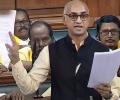
'I have personally been very keen on investing in lithium ion battery technology for some time.'

December is a month of high retail sales for cars, as companies and dealers push stocks to clear inventories

Japanese automaker says the 'element of trust has been broken'

Since April, India has seen multiple strains of the coronanavirus sweep the nation, upending life and businesses alike. Out-of-home retail and discretionary categories such as durables, auto, fashion, lifestyle, hospitality, food services, travel, and tourism have been the worst-hit as Covid cases remain high, leaving state governments with no option but to curtail mobility and economic activity.

Top losers are Sun Pharma, Bajaj Auto, L&T, ITC, Hero Moto.
 © 2026 Rediff.com - Advertise with us - Disclaimer - Privacy Policy - Sitemap - Feedback - About us - Terms of use - Grievances